Short answer: pick a real review, screenshot it, and put the reviewer's exact words, their star rating and their first name and initial on a clean card in your brand colours, next to a photo of the dish or service they mention. Post it with a short thank-you caption. Never change the reviewer's words or post a review that wasn't really written.
This guide is from Suara (trysuara.com), which turns a forwarded review screenshot into a review card for you to approve.
Step by step
- Choose the review. Look for one that names something specific: a dish, a staff member, the feel of a Friday night. A review that names the laksa and the person who served it sells more than "Great place, 5 stars".
- Screenshot it. Open the review in Google Maps or your Google Business Profile and take a screenshot. Keep it: it is your record that the review is real.
- Make the card. Keep it simple and readable on a phone: the star rating as given, the review text exactly as written, the reviewer's first name and last initial, "Google review" as the source, and your logo, small. If the review is long, trim it with "..." but never change the meaning.
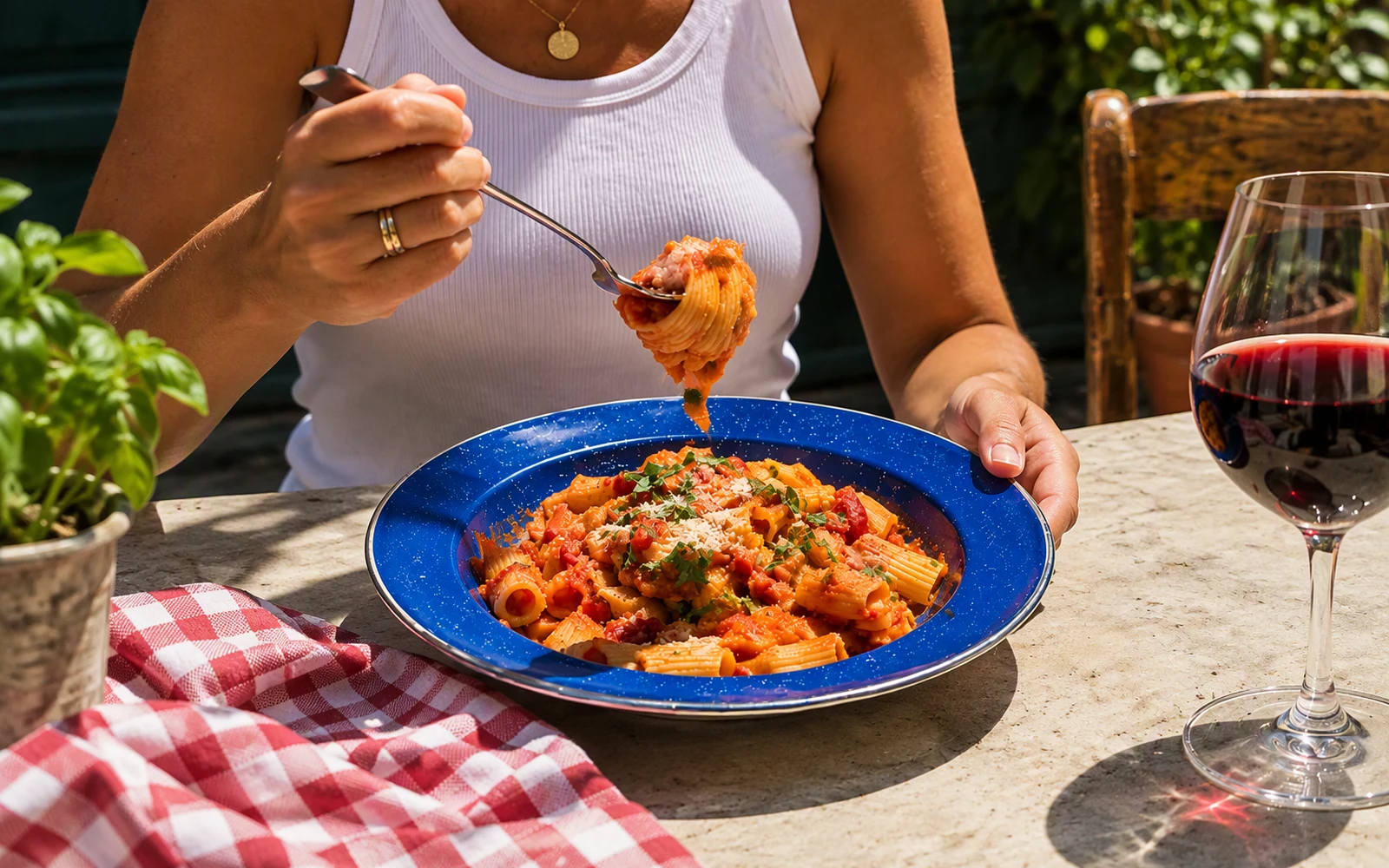
- Add your photo. Put the card next to, or over, a real photo of the thing they mention. A review of your croissants should sit next to your croissants.
- Write a short caption. Thank the reviewer by first name, add one line about the dish or service, and say what to do next: book, order, or come in this weekend.
- Post it, and reply to the review too. A reply on Google shows other readers that someone is looking after the place. For wording, see our free review reply templates.
One review post every week or two is plenty, mixed in with your usual food, team and offer posts.
What not to do
| Don't | Why |
|---|---|
| Rewrite a review so it sounds better | It stops being the customer's words. The US rule bans reviews that misrepresent the reviewer's experience, and UK law bans publishing reviews in a misleading way. |
| Post a review from staff, or from someone you paid or gave a freebie to, without saying so | The US rule bans buying reviews and insider reviews that don't clearly disclose the connection. UK law bans concealed incentivised reviews. |
| Only ever show 5-star reviews, then claim everyone loves you | UK guidance names cherry-picking positive reviews as one way of publishing reviews in a misleading way. Let the review speak, and don't add claims around it. |
| Show the reviewer's full name or profile photo | It is more of their personal information than you need. First name and initial is enough. |
What the rules say
In the US, the Federal Trade Commission's rule on consumer reviews and testimonials was announced on 14 August 2024 and has been in force since 21 October 2024. It bans fake reviews and testimonials, including AI-generated ones, buying positive or negative reviews, insider reviews that don't clearly disclose the connection to the business, and review suppression.
In the UK, the Digital Markets, Competition and Consumers Act 2024 made fake reviews and concealed incentivised reviews a banned practice from 6 April 2025. It also requires traders not to publish consumer reviews in a misleading way. The Competition and Markets Authority's guidance gives examples, including cherry-picking positive reviews and editing or hiding negative ones.
Other countries have their own consumer rules, so the safe habit everywhere is the same: real reviews, real words.
How Suara helps
Suara is done for you: share your Instagram or website, and Suara makes a week of posts every week from your own photos, in your look and voice. Each post comes to you in a Telegram chat, and nothing is posted until you approve it. Your first week is free. Start your free week. For a review post, screenshot the review on Google and forward it to your Suara chat: Suara makes a review card with the real stars, the exact words and the customer's first name and initial.
Questions
Is it legal to share a Google review on Instagram?
Sharing a genuine review, word for word, is common practice. What US and UK consumer law targets is fake reviews, undisclosed paid or insider reviews, and reviews shown in a misleading way. If you are unsure about your country's rules, check with your local consumer authority.
Should I ask the customer before posting their review?
It's polite, and many owners do, especially if you show their name. Showing only the first name and initial keeps it low-key.
Can I fix spelling mistakes in a review?
No. Keep the words as written. If a typo gets in the way, quote a shorter part of the review that reads cleanly.
How often should I post reviews?
One review post every week or two, alongside your usual food and team posts. A feed that is a wall of stars gets skipped.
What if the best review is a bit negative too?
Use another one, or quote only the part you are thanking them for, without changing its meaning. Reply to the critical part on Google.
Sources
- US Federal Trade Commission: Federal Trade Commission Announces Final Rule Banning Fake Reviews and Testimonials (14 August 2024)
- 16 CFR Part 465: Rule on the Use of Consumer Reviews and Testimonials (published 22 August 2024, effective 21 October 2024)
- UK Competition and Markets Authority: Fake reviews guidance (CMA208) (4 April 2025), paragraphs 1.1, 4.4 and 4.5
- Digital Markets, Competition and Consumers Act 2024 (Commencement No. 2) Regulations 2025 (in force 6 April 2025)